📥📥📥900Mb
📥📥📥 3.4Gb
🎬 Movie Review: GDN (2026) – A Remarkable Life That Deserved a More Powerful Biopic
⭐ Quick Review Overview
| Category | Details |
|---|---|
| Movie | GDN |
| Release Date | 7 August 2026 |
| Language | Tamil |
| Genre | Biography / Drama |
| Director | Krishnakumar Ramakumar |
| Lead Actor | R. Madhavan |
| Runtime | 2h 26m |
| Certification | U/A |
| Music | Govind Vasantha |
| Cinematography | Aravind Kamalanathan |
| Overall Rating | ⭐⭐⭐½☆ 3.5/5 |
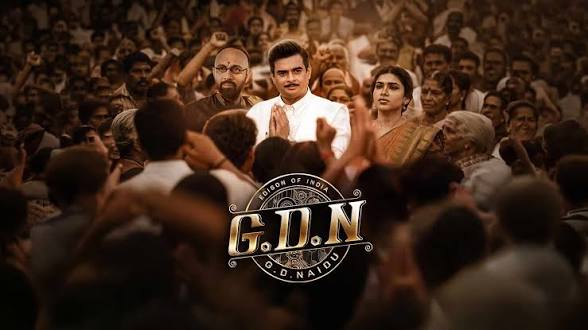
GDN is a biographical drama based on the extraordinary life of Gopalswamy Doraiswamy Naidu (G.D. Naidu), the celebrated Coimbatore inventor, industrialist and self-taught innovator often referred to as the “Edison of India.” The film focuses on his inventions, ambitions and repeated clashes with authorities while attempting to turn his ideas into reality.
The movie had a limited theatrical release on 7 August 2026 and is now streaming on Netflix from 4 September 2026, including dubbed versions in Hindi, Telugu, Malayalam and Kannada.
📖 Storyline & Narrative
GDN tells the story of G.D. Naidu, a man whose curiosity and determination pushed him far beyond the technological limitations of his era.
Rather than being born into a world of advanced technology, Naidu was essentially a self-taught inventor whose fascination with machines led him to experiment, dismantle things and understand how they worked.
His journey eventually takes him from humble beginnings into the worlds of:
- Engineering
- Transportation
- Manufacturing
- Agriculture
- Electrical innovation
- Industrial entrepreneurship
One of the major achievements highlighted by the film is Naidu’s development of an indigenous electric motor. His transportation business also grew into a major bus operation.
But GDN isn’t simply about inventions.
A major part of the narrative is about Naidu’s relationship with power and authority. His ideas repeatedly come into conflict with government regulations and bureaucratic systems.
The film therefore becomes a story about a brilliant individual attempting to push society forward while repeatedly encountering institutional resistance.
🎭 Performances
⭐ R. Madhavan – G.D. Naidu
The biggest strength of GDN is undoubtedly Madhavan’s performance.
He doesn’t simply imitate Naidu’s appearance. He attempts to capture the man’s curiosity, stubbornness, intelligence and eccentric personality.
Several critics have singled out Madhavan as the film’s strongest element. The Indian Express described it as a career-best performance, while other reviews similarly praised his transformation and commitment to the role.
Madhavan manages to make Naidu interesting even when the screenplay becomes overly informational.
Rating: ⭐⭐⭐⭐½/5
⭐ Priyamani
Priyamani provides emotional grounding to the otherwise achievement-focused narrative.
Her character helps reveal the personal side of Naidu’s life, although the screenplay doesn’t always give the supporting characters enough space to develop fully.
⭐ Jayaram
Jayaram plays Ambalapara Krishnan, a principled character who becomes an important presence within the story.
His performance adds dignity and maturity to the period drama. The character also represents some of the moral and political dimensions surrounding Naidu’s journey.
⭐ Sathyaraj
Sathyaraj brings his usual authority to his role.
Even with limited screen space compared with Madhavan, his presence adds weight to the ensemble.
⭐ Dushara Vijayan
Dushara Vijayan is another notable member of the ensemble.
The film has a large supporting cast, including Karunakaran, Vinay Rai and Aditi Balan, but the narrative remains firmly centred on Madhavan’s Naidu.
🎬 Direction & Screenplay
Director Krishnakumar Ramakumar clearly approaches GDN as a serious historical-biographical project.
The ambition is impressive.
The problem is that Naidu’s actual life is considerably more fascinating than the screenplay’s dramatic treatment of it.
This is the central weakness identified by several critics.
The New Indian Express argued that the incredible real-life story deserved more than the film delivers, while The Hollywood Reporter India criticised the film for turning a colourful life into a flat portrait.
The screenplay attempts to cover a tremendous amount of history.
That gives the audience plenty of information, but not always enough emotional connection.
Instead of spending more time on a handful of extraordinary incidents, the film sometimes moves quickly from one achievement or historical event to another.
📷 Cinematography
Aravind Kamalanathan’s cinematography is one of the film’s stronger technical departments.
The period setting is recreated with considerable care.
The visual design helps establish:
- Colonial-era India
- Early industrial environments
- Old transportation systems
- Workshops and machinery
- Rural landscapes
- Historical political settings
The visuals successfully create the feeling of travelling through several decades of Naidu’s life.
Tamil review coverage also specifically praised the cinematography for bringing the period alive.
Rating: ⭐⭐⭐⭐/5
🎵 Music & Background Score
Govind Vasantha handles the music.
The score generally complements the period atmosphere rather than overpowering the narrative.
Because the film is primarily a biographical drama, the background music has the more important responsibility of supporting Naidu’s journey and emotional moments.
The music works best when it gives scale to his ambitions without turning every achievement into a conventional heroic moment.
Rating: ⭐⭐⭐½/5
✂️ Editing
The film has a runtime of approximately 146–147 minutes.
This is where the film’s ambitious scope becomes a disadvantage.
There is simply a tremendous amount of material to cover.
The Hindu noted that rather than attempting to pack so much of Naidu’s life into the 147-minute runtime, the film could have selected fewer highlight moments and allowed them to breathe.
The editing isn’t technically poor, but the narrative compression makes the film occasionally feel like a historical overview rather than a deeply immersive character drama.
Rating: ⭐⭐⭐/5
🧠 Critical Analysis
The fascinating thing about GDN is the difference between the man and the movie.
The real G.D. Naidu appears to have lived an extraordinarily unconventional life.
He was an inventor, businessman, agricultural enthusiast and industrial pioneer who interacted with some of the major personalities and political forces of his time.
The film gives us glimpses of this extraordinary world.
But it doesn’t always make us feel the extraordinariness.
That’s why the movie has received mixed reviews.
⭐ What the film gets right
It introduces a relatively underrepresented Indian innovator to a much wider audience.
For viewers who know little about G.D. Naidu, the film is genuinely educational.
It also avoids reducing him entirely to a collection of inventions. His clashes with authorities and his determination to pursue his ideas are important parts of the narrative.
⚠️ What the film gets wrong
The screenplay is too often informative rather than dramatic.
The audience learns about Naidu’s achievements, but some of those achievements don’t receive enough dramatic buildup.
The result is a strange contradiction:
The story is extraordinary.
The protagonist is fascinating.
The performance is excellent.
But the movie itself isn’t always equally fascinating.
That assessment is broadly reflected in the critical response: Times of India gave it 3/5, Indian Express 2.5/5, NDTV 2.5/5, while Rediff also gave 2/5.
⏱️ First Half vs Second Half
⭐ First Half – 4/5
The first half is the more engaging portion.
It establishes Naidu’s curiosity and introduces his extraordinary ability to understand machines.
The progression from an inquisitive young man to an ambitious inventor is interesting.
There is also a stronger sense of discovery in the early portions.
Some early audience reactions particularly praised the first half and Madhavan’s transformation.
⭐ Second Half – 3/5
The second half becomes more heavily focused on Naidu’s confrontations with authorities and the obstacles placed before his ambitions.
The subject remains interesting, but the storytelling becomes increasingly episodic.
Instead of building toward one powerful dramatic climax, the film sometimes feels like a sequence of historical incidents.
This is where the 147-minute runtime begins to feel noticeable.
✅ What Works
- ⭐ R. Madhavan’s excellent transformation and performance
- ⭐ Fascinating real-life subject
- ⭐ Introduces G.D. Naidu to a wider audience
- ⭐ Strong period atmosphere
- ⭐ Impressive production design
- ⭐ Good cinematography
- ⭐ Interesting historical context
- ⭐ Strong supporting cast
- ⭐ Inspiring story of Indian innovation
- ⭐ Educational value
❌ What Doesn’t Work
- ⚠️ Screenplay is too informational
- ⚠️ Too many events are packed into the runtime
- ⚠️ Supporting characters aren’t explored deeply enough
- ⚠️ Emotional connection is weaker than expected
- ⚠️ Some portions feel episodic
- ⚠️ The extraordinary real-life story isn’t always translated into equally extraordinary cinema
- ⚠️ Second half loses some momentum
🏆 Final Verdict: Is GDN Worth Watching?
Yes — particularly if you are interested in Indian history, science, inventions and inspiring real-life personalities.
GDN has a genuinely remarkable subject at its centre, and R. Madhavan is the film’s biggest reason to watch it.
The film deserves credit for bringing the story of G.D. Naidu to a mainstream audience. His life contains enough extraordinary material for a spectacular biopic.
Unfortunately, the screenplay sometimes feels more like a well-researched historical account than a gripping cinematic biography.
If the film had focused on fewer events and explored them more deeply, it could have been considerably more powerful.
Still, GDN succeeds in one important way:
It makes you curious about the real G.D. Naidu.
And perhaps that is the film’s greatest achievement.
⭐ Final Rating: 3.5/5
Story: ⭐⭐⭐⭐½
Performances: ⭐⭐⭐⭐½
Direction: ⭐⭐⭐½
Screenplay: ⭐⭐⭐☆☆
Cinematography: ⭐⭐⭐⭐☆
Music: ⭐⭐⭐½☆
Editing: ⭐⭐⭐☆☆
Emotional Impact: ⭐⭐⭐½☆
Historical Value: ⭐⭐⭐⭐½
Overall: ⭐⭐⭐½☆
🎯 Verdict:
A fascinating story, a superb Madhavan and an important historical subject — but the screenplay doesn’t fully unlock the extraordinary cinematic potential of G.D. Naidu’s life.
📺 OTT Availability
GDN is now streaming on Netflix from 4 September 2026, following its theatrical release in August. It is available in Tamil as well as Hindi, Telugu, Malayalam and Kannada versions.