Download 900Mb
Download 2.3Gb
Movie Review: Once More (2026) – A Feel-Good Romance About Second Chances, Healing and Letting Love In
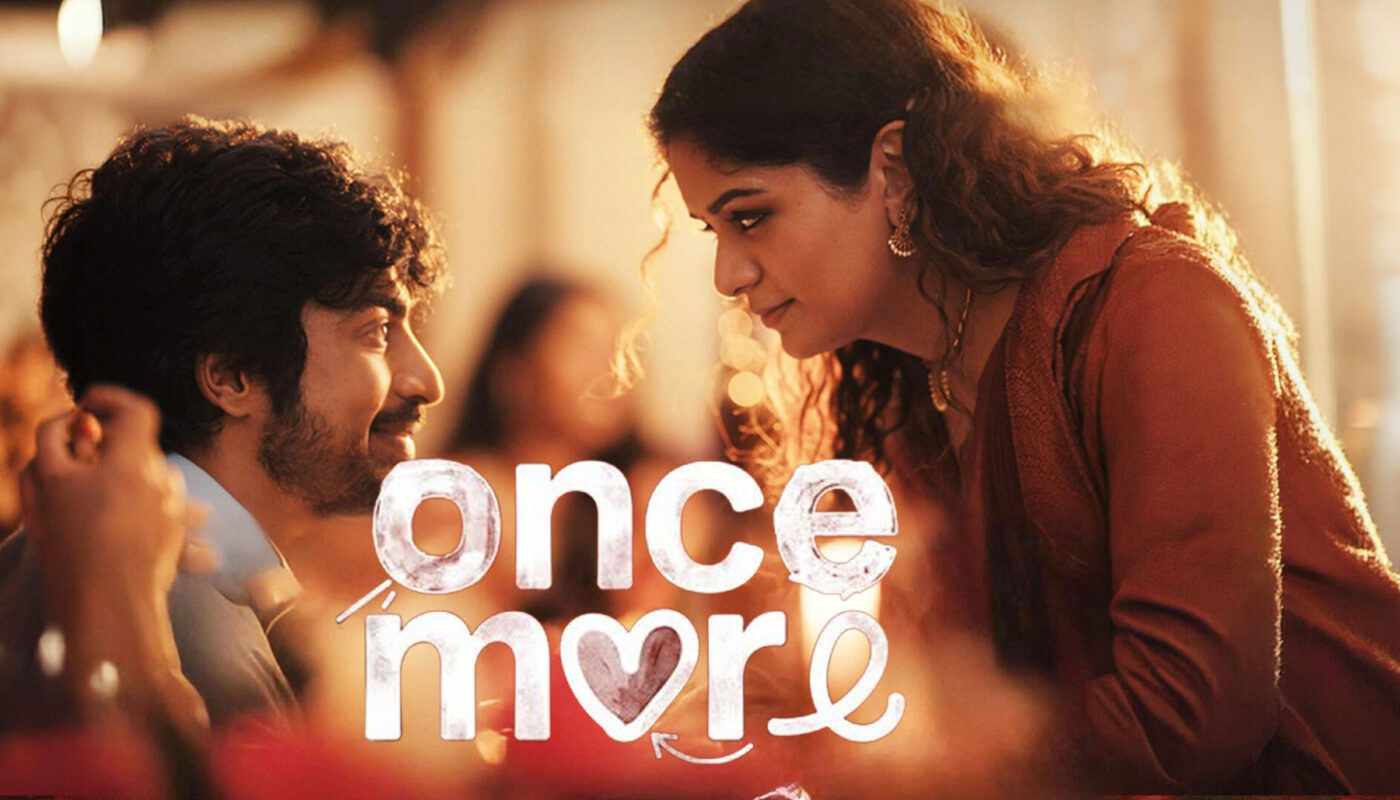
Once More is a Tamil romantic drama written and directed by Vignesh Srikanth, starring Arjun Das as Raghu and Aditi Shankar as Anjali. The film also features Sona Olickal, Dravid Selvam, Anusha Prabhu and Chitra Lakshmanan in supporting roles. It was released theatrically on August 28, 2026, and has a runtime of around 2 hours 11–17 minutes, depending on the listing. (BookMyShow)
At its heart, Once More is about a man who has become emotionally trapped by a painful past and the unexpected person who gradually teaches him that love can return in a different form. The film mixes romance, heartbreak, healing and bittersweet closure in a deliberately gentle manner. (Rotten Tomatoes)
Quick Review Overview
| Attribute | Details |
|---|---|
| Director | Vignesh Srikanth |
| Writer | Vignesh Srikanth |
| Lead Cast | Arjun Das, Aditi Shankar |
| Supporting Cast | Sona Olickal, Dravid Selvam, Anusha Prabhu, Chitra Lakshmanan |
| Music Composer | Hesham Abdul Wahab |
| Cinematography | Aravind Viswanathan |
| Editor | Nash |
| Genre | Romantic Drama |
| Language | Tamil |
| Runtime | Approximately 131–137 minutes |
| Certification | UA / UA16+ |
| Theatrical Release | August 28, 2026 |
| Production | Million Dollar Studios |
| Producer | Yuvaraj Ganesan |
The main cast and crew are listed by BookMyShow and Filmibeat, while IMDb lists the film at 131 minutes. (BookMyShow)
Storyline: When Love Comes Back in an Unexpected Form
At the centre of Once More is Raghu, played by Arjun Das.
Raghu is a man carrying the emotional weight of a painful relationship from his past.
The heartbreak has changed him.
Rather than moving forward, he remains emotionally attached to what happened before, making it difficult for him to accept the possibility of another relationship.
Then comes Anjali, played by Aditi Shankar.
Anjali is almost the complete opposite of Raghu’s emotional state.
She is energetic, optimistic and determined to bring happiness back into his life.
She doesn’t simply fall in love with him.
She tries to make him believe that he is still capable of loving again.
That becomes the emotional foundation of the film.
The story asks a simple but relatable question:
Can someone who has been broken by love find the courage to love again?
The film’s official synopsis describes it as a story about love returning through an unexpected person, second chances, healing and bittersweet closure. (Rotten Tomatoes)
Character Performances: Arjun Das and Aditi Shankar Drive the Film
Arjun Das as Raghu
Arjun Das gets a role that suits his naturally brooding screen presence.
Raghu is not the typical cheerful romantic hero.
He is emotionally wounded, withdrawn and hesitant.
Arjun Das uses his distinctive voice and restrained body language effectively to communicate Raghu’s internal sadness.
The performance works particularly well because he doesn’t attempt to over-dramatise the character.
His Raghu feels like someone who has genuinely lost faith in relationships.
The film’s emotional weight rests heavily on his shoulders, and he handles that responsibility well.
Recent audience reactions have specifically praised Arjun Das’s performance alongside Aditi Shankar’s. (The Times of India)
Aditi Shankar as Anjali
Aditi Shankar is the film’s biggest source of energy.
As Anjali, she gets a lively and positive character who refuses to let Raghu remain trapped inside his past.
Her cheerful screen presence gives the first half much of its charm.
She brings a natural warmth to the romantic scenes and creates convincing chemistry with Arjun Das.
The Times of India particularly praised Aditi’s ability to enliven the film’s early portions. (The Times of India)
She effectively becomes the emotional opposite of Raghu:
Raghu represents the past.
Anjali represents the possibility of a future.
Sona Olickal
Sona Olickal plays an important character connected to Raghu’s past.
Her performance becomes particularly important once the film begins exploring the earlier relationship that continues to affect Raghu.
However, this section of the story is where the film loses some of its momentum.
The Times of India felt that both the character and casting in this crucial past-romance portion were less compelling, weakening the middle section. (The Times of India)
Dravid Selvam
Dravid Selvam is part of the supporting ensemble.
His presence contributes to the film’s broader emotional and interpersonal dynamics.
Anusha Prabhu
Anusha Prabhu also appears in the supporting cast, helping expand the film’s character-driven world.
Chitra Lakshmanan
Veteran performer Chitra Lakshmanan adds experience to the supporting cast.
His presence gives the family-oriented portions additional familiarity and emotional grounding. (BookMyShow)
Technical Craft & Direction: Simple Romance with a Feel-Good Heart
Director Vignesh Srikanth chooses a relatively simple storytelling approach.
The film doesn’t attempt to become a massive commercial romantic entertainer.
Instead, it concentrates on:
- Relationships
- Emotional wounds
- Communication
- Second chances
- Personal healing
- Moving beyond the past
That simplicity is one of its strengths.
The problem is that the screenplay sometimes feels too familiar.
The Times of India noted similarities to the emotional structure of films such as Autograph, Premam and Hridayam, describing Once More as structurally close to Hridayam despite some differences. (The Times of India)
Cinematography
Aravind Viswanathan handles the cinematography.
The visuals support the film’s youthful romantic atmosphere.
The cinematography works particularly well during the lighter portions involving Raghu and Anjali.
The film aims for a warm, accessible visual style rather than a heavily stylised presentation.
Music & Background Score
Hesham Abdul Wahab provides the music.
This is one of the film’s strongest technical departments.
The music adds much-needed brightness to the romance and helps create the film’s feel-good atmosphere.
Hesham’s involvement is particularly notable because of his association with Hridayam, which also becomes relevant when comparing the two films’ romantic structures.
Audience reactions have repeatedly highlighted the music as one of Once More‘s strengths. (BookMyShow)
The songs and background score help carry some scenes that might otherwise feel emotionally ordinary.
Editing
Nash handles the editing.
The film’s first half moves relatively smoothly.
However, the middle portion becomes less engaging when the narrative returns extensively to Raghu’s past.
At approximately two hours and eleven minutes, the movie isn’t excessively long, but some scenes could still have been tightened.
The problem isn’t necessarily runtime alone.
It’s the fact that the screenplay loses its emotional momentum midway through.
Critical Analysis: Can You Love Again After Heartbreak?
The most appealing theme in Once More is emotional healing.
The movie doesn’t treat love simply as finding another romantic partner.
Instead, it explores the process of becoming emotionally available again.
Raghu has experienced heartbreak.
His problem isn’t that he doesn’t want love.
It’s that he doesn’t want to experience the pain that might come with it again.
Anjali challenges that fear.
She represents the possibility that a second relationship doesn’t have to repeat the first.
That’s where the title becomes meaningful.
“Once More” isn’t simply about repeating an old romance.
It’s about getting another opportunity.
Another chance.
Another beginning.
First Half vs Second Half
First Half – The Stronger Portion ⭐⭐⭐⭐
The first half is the film’s biggest strength.
The chemistry between Arjun Das and Aditi Shankar works.
Anjali’s cheerful personality creates an interesting contrast with Raghu’s emotional distance.
The humour and romance feel natural.
The music also adds significantly to the experience.
This is the portion where the film feels freshest.
The Times of India described the first half as a breeze, particularly praising Aditi Shankar’s presence and Hesham Abdul Wahab’s music. (The Times of India)
Second Half – Uneven and Familiar ⭐⭐½
The second half is where Once More loses some of its charm.
The story returns to Raghu’s past romance, and the emotional impact isn’t as strong.
The film begins to feel more conventional.
Some developments are predictable, while the screenplay spends too much time explaining emotional situations instead of allowing the audience to experience them.
The Times of India’s 2.5/5 review similarly found that the past-romance portion weakened the movie before it recovered toward the end. (The Times of India)
What Works
✅ Arjun Das
His brooding screen presence suits Raghu perfectly.
✅ Aditi Shankar
She brings energy, warmth and charm to the movie.
✅ Lead Chemistry
Arjun Das and Aditi Shankar share convincing chemistry.
✅ Hesham Abdul Wahab’s Music
One of the film’s biggest technical highlights.
✅ Emotional Theme
The idea of learning to love again after heartbreak is relatable.
✅ Feel-Good Atmosphere
Despite the heavier emotional subject, the film remains accessible.
✅ Positive Message
The film encourages people to move beyond emotional baggage and give themselves another chance.
What Doesn’t Work
❌ Familiar Story
The basic romantic structure has been explored many times before.
❌ Weak Past-Romance Portion
The flashback relationship doesn’t carry enough emotional weight.
❌ Uneven Second Half
The movie loses momentum midway.
❌ Predictable Developments
Several emotional turns are easy to anticipate.
❌ Some Writing Issues
The screenplay occasionally explains feelings rather than naturally dramatizing them.
❌ Runtime Could Be Tighter
Some portions could have been shortened without losing the central story.
Final Verdict: Is It Worth Watching?
Once More is a warm and accessible romantic drama that succeeds mainly because of Arjun Das, Aditi Shankar and Hesham Abdul Wahab’s music, even though its familiar screenplay prevents it from becoming a truly memorable love story.
Arjun Das delivers a controlled and emotionally restrained performance as Raghu, while Aditi Shankar brings the film alive with her cheerful and energetic portrayal of Anjali.
The supporting cast, including Sona Olickal, Dravid Selvam, Anusha Prabhu and Chitra Lakshmanan, provides adequate support.
The film’s biggest success is its emotional message:
Sometimes moving on doesn’t mean forgetting the past. It means finding the courage to believe in love again.
The film has received a mixed critical response. The Times of India rated it 2.5/5, while early audience reactions have been considerably more enthusiastic, with BookMyShow users praising its acting, direction, music and feel-good atmosphere. (The Times of India)
So, if you enjoy romantic dramas, second-chance love stories, emotional healing and feel-good Tamil cinema, Once More is worth a watch.
If you’re looking for a highly original romantic story, the film may feel too familiar.
Overall Rating: ⭐⭐⭐ / 5